

Against the backdrop of accelerated upgrades in global logistics and supply chain management, warehousing systems are facing multiple challenges: limited land, large-scale cargo, and high operational efficiency. Traditional multi-column, small-span racking occupies significant space due to aisles and supports, making it difficult to meet the dual demands of modern enterprises for storage density and turnover efficiency. Large-span storage racking has emerged in this industry context and is gradually becoming a core component of high-density storage solutions.
From a macro perspective, continued urbanization and industrialization are driving up warehousing land costs, forcing enterprises to achieve greater cargo storage capacity within limited space. Simultaneously, the rapid development of manufacturing, commerce, e-commerce, and cold chain industries is leading to larger cargo volumes, more concentrated product categories, and the common practice of bulk palletized storage and retrieval. The shortcomings of traditional layouts in terms of aisle occupancy and storage path optimization are becoming increasingly apparent. Large-span storage racking, by reducing intermediate support columns and redundant aisles, significantly extends the lateral coverage distance, thereby increasing the total number of storage locations within the same floor area, effectively alleviating land constraints and reducing unit storage costs.
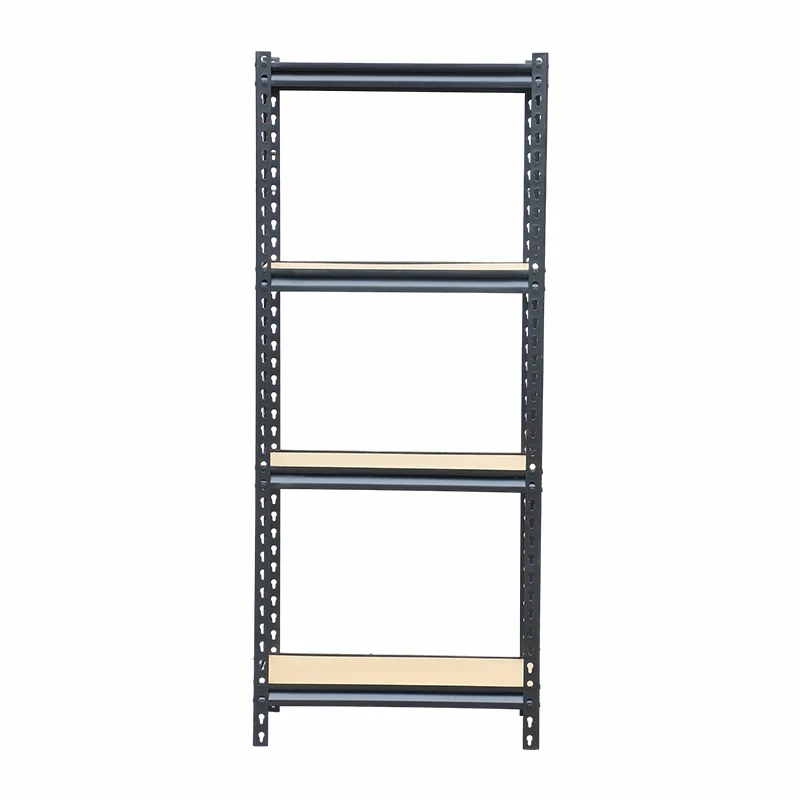
Technological advancements have provided solid support for the widespread adoption of this type of shelving. The mature application of high-strength steel, the widespread use of optimized cross-section design and finite element simulation analysis have enabled large-span beams to achieve higher levels of performance in mid-span deflection control, nodal stress dispersion, and overall structural stability. Improvements in surface corrosion protection and coating processes have enhanced its durability in high-humidity, low-temperature, and corrosive environments. Collaborative design with forklifts, stackers, and automated storage and retrieval equipment has enabled precise matching of shelving layout with operating equipment parameters, ensuring safety and efficiency in high-density environments.
Its practical significance is reflected in several aspects: First, it significantly improves space utilization, freeing up more usable area for value-added processes; second, it shortens the path for goods storage and retrieval, improving operational efficiency and reducing equipment energy consumption; third, relying on a robust structure and comprehensive protection, it reduces safety risks caused by instability or overloading; and fourth, it possesses good scalability and adaptability, allowing for flexible layout optimization as business grows and product structure adjusts, extending the facility's service life.
Overall, the development of long-span storage racks is both an inevitable choice for the warehousing industry to cope with land and cost pressures, and a crucial support for modern logistics to move towards high density, high efficiency, and intelligence. Its role in optimizing space resources, improving supply chain responsiveness, and ensuring operational safety will continue to inject strong momentum into the industry's high-quality development.


